
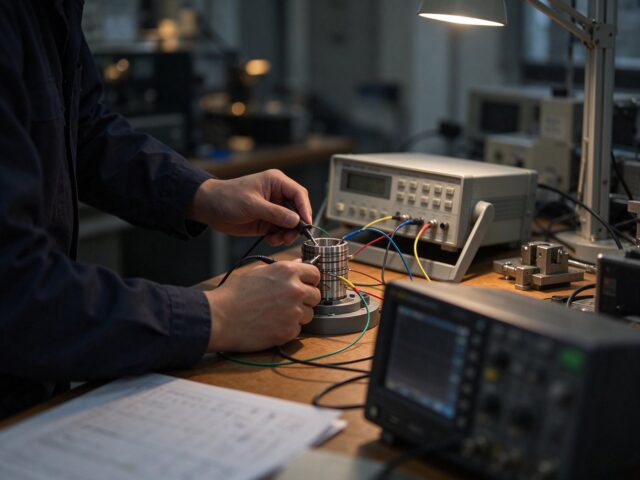
How to Specify a Slip Ring: The Nine Parameters That Decide the Design
Most slip ring enquiries fail on missing information. These nine parameters, in this order, are what an engineer needs before a drawing can be…
Read →The reference material our own engineers use when quoting: sizing rules, contact materials, sealing classes, life calculations and the questions buyers ask most often.
A slip ring is an electromechanical device that passes power, signals or data from a stationary structure to a rotating one. It consists of conductive rings and brushes, so a cable does not have to twist and unwind as the joint turns. It allows unlimited 360° rotation without a cable wrap.
Match the family to the mechanical constraint. Capsules are small cylindrical units for tight joints. Through-bore rings have a hollow centre so a shaft or cable can pass through. Pancake rings are flat discs for height-limited envelopes. If the joint needs fluid passages or an encoder, an integrated assembly is usually cheaper than stacking separate components.
Circuits and their type, current per circuit, voltage, bore or outer diameter, available length, rotation speed and cycles per year, IP rating, operating temperature, interface connectors and annual volume. A photo with a ruler in frame is enough to start if you have an existing unit.
Technical acknowledgement within 24 working hours. Envelope drawing and firm quotation normally within 2 working days for standard families, and 3–5 working days when a new mechanical envelope has to be designed.
One piece for evaluation and prototype work. Price breaks start at 100 pieces and improve again at 1,000. Tooling charges, where a new envelope is needed, are quoted separately and are one-time.
Standard variants ship in 15–25 working days after drawing approval. Prototypes with new tooling take 3–5 weeks depending on the machining and test scope. Volume programmes are scheduled with a rolling forecast.
Life is expressed in revolutions at a defined current and speed. Precious-metal contacts on signal circuits typically reach tens of millions of revolutions; power circuits with silver-graphite brushes are limited by brush wear and are rated for the brush volume supplied. We bench-test to the customer declared cycle count before release and document the wear rate so replacement intervals can be planned.
Yes, and it is a large part of our workload. Send a worn sample or a photo with dimensions, and we reverse-engineer a drop-in replacement matching the mounting pattern, shaft, stack height and harness. We supply a deviation list where the replacement differs from the original, so your file stays accurate.
Both. IP65 covers washdown and outdoor spray. IP68 assemblies are pressure compensated and pressure-tested at 1.5× the declared working depth with the shaft rotating. Depth ratings up to 300 m are standard; deeper units are quoted individually.
Yes. Ethernet channels from 100BASE-T to 10 Gigabit are carried on dedicated shielded contacts with controlled impedance and a verified bit error rate. Fibre channels use an optical rotary joint module with insertion loss specified per channel, typically 2 dB for four channels.
Yes. NDAs are signed before confidential drawings are exchanged, and customer drawings, models and test data are never reused for other customers. We can also work from an anonymised outline if the programme requires it.
We ship to more than 40 countries. Samples go by DHL or FedEx door-to-door; volume goes by sea or air freight. Quotations are in USD, EUR or RMB, with Incoterms stated explicitly. Export documentation includes invoice, packing list, certificate of origin and the serial-numbered test report.
Most slip ring enquiries fail on missing information. These nine parameters, in this order, are what an engineer needs before a drawing can be…
Read →
A slip ring can pass its insulation test and still fail in service. Contact resistance, measured per circuit, is the figure that predicts real…
Read →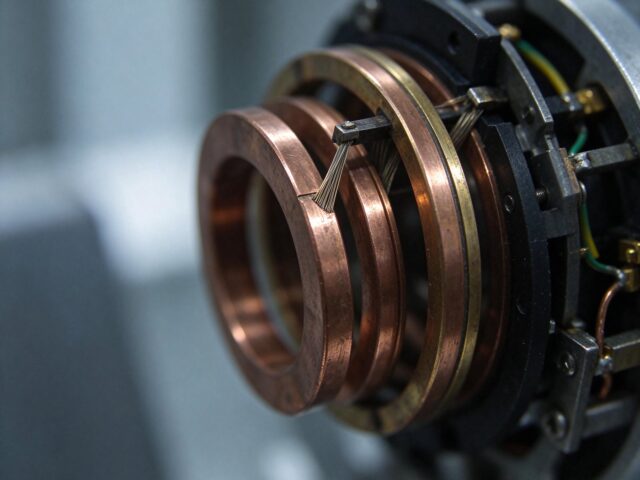
Contact material is the single decision that sets life, noise and cost. Here is how the three common choices behave in practice.
Read →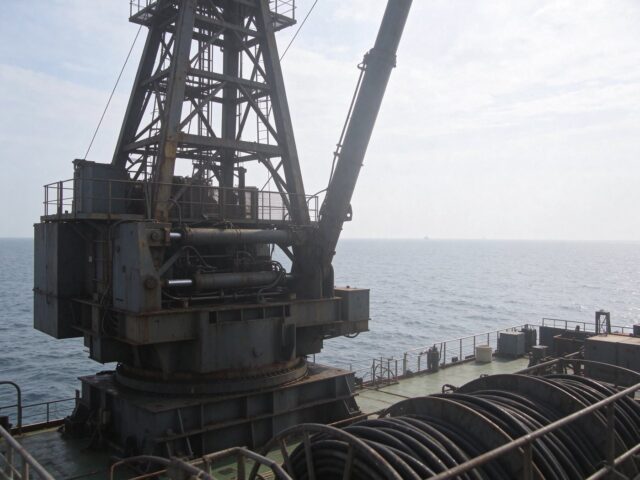
IP68 is not automatically better than IP65. On a deck crane the difference between the two is pressure compensation, not seal quality.
Read →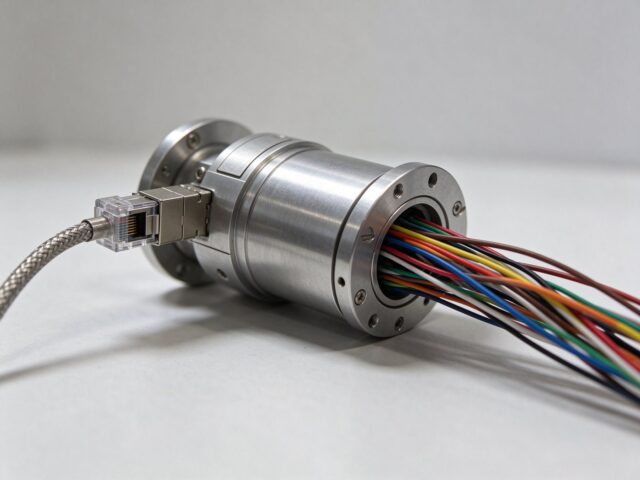
A slip ring can be sold as “Gigabit capable” and still drop frames in service. What you need is a measured bit error rate…
Read →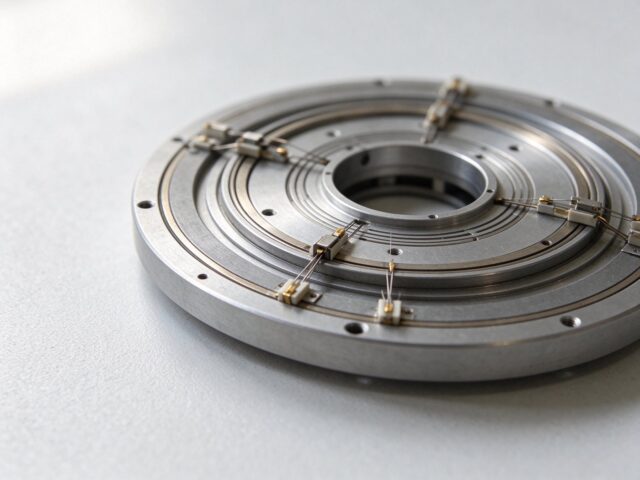
Two families, both round, both rotating. The choice between a flat disc and a hollow cylinder is made by the space you have, not…
Read →Circuits, current, bore size, IP rating, temperature — give us the parameters and our engineers return a feasibility note, drawing and quotation within 24 working hours.