
Drop-In Replacement for an Imported Crane Slip Ring
A port operator needed to replace a discontinued crane slewing ring without modifying the mounting or the cable harness.
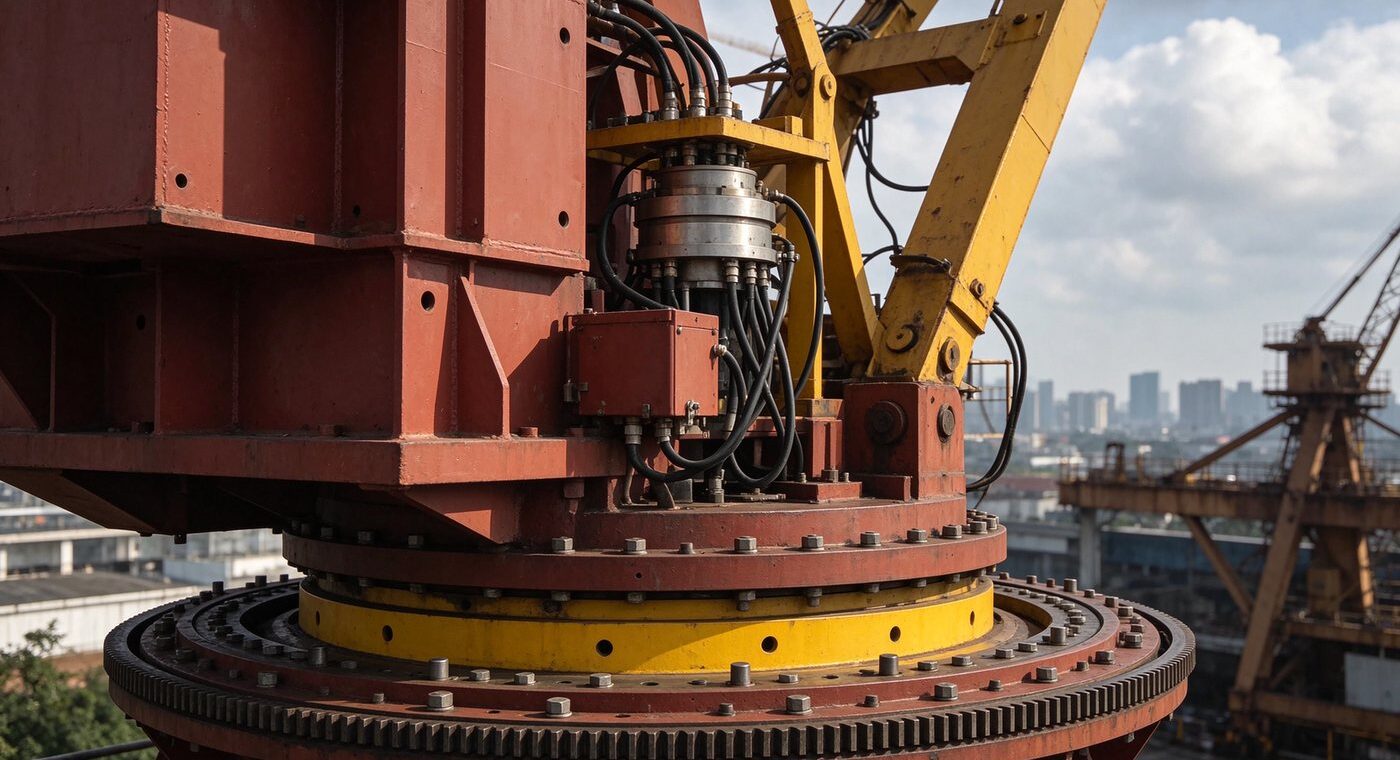
The constraint. A port operator ran six ship-to-shore cranes with a slewing slip ring that the original manufacturer had discontinued. The mounting flange was welded to the crane structure, so a replacement had to match the bolt pattern, the shaft diameter and the existing cable harness exactly.
What we did
- Reverse-engineered the original unit from a worn sample: measured the flange, bore, stack height and circuit layout.
- Reproduced the harness with matching wire colours, lengths and connector types, so the crane harness did not have to be changed.
- Improved the sealing from IP54 to IP65 without changing the envelope, because the port environment was harsher than the original design assumed.
- Ran a first article on one crane before releasing the remaining five.
Result
Nine weeks from sample receipt to first article, then five more units over three months. The cranes returned to service without structural modification or harness rewiring, and the operator now has a second source for a part that was previously obsolete.
Why this is typical
Most of our replacement work starts with a worn part and a photo. Reverse engineering from a physical sample is faster and more accurate than starting from a drawing that may not reflect the as-built crane.
Similar constraint on your project?
Describe the environment and duty cycle; we will tell you which family we would start from.